Common Sports Injuries and How To Avoid Them
By Dr. Jon Thomas D.C PSc.D, Board Certified Chiropractic Physician.
 |
| Courtesy Pixabay |
As I mentioned in my previous
blog post, exercise is generally a healthy activity. However, if exercises
aren’t done correctly, injuries can result. Overuse and strain cause the most
common sports related injuries. Repetitive activity can cause wear and tear on
the ankles, knees, shoulders, and elbows.
In my previous post, I mentioned
some of the most common injuries related to exercise and provided tips on how
to avoid them. Running causes more injuries than any other exercise. Other
common exercises that can cause injuries include biking, dance (including high
impact aerobics), tennis, basketball, gymnastics, football, soccer, and skating.
Here are a few more common
injuries related to exercise.
Shin Splints
Shin
splints are pains in the muscles near the shins. Running is the most frequent
cause of shin splints. Shin splints are also common for people who spend long
periods of time on their feet, such as dancers, athletes, and soldiers. Shin
splints are most commonly caused by running and jumping on hard surfaces. People
who are unaccustomed to rigorous exercise can suffer from shin splints. People
who routinely exercise may also experience shin splints when they switch shoes,
run on harder surfaces, or increase the intensity of their workout.
 |
| Courtesy Wikimedia |
The
muscle responsible for raising the arch of the foot attaches to the shin bone on
the inner side of the middle third of the shin. The foot arch collapses with
each foot strike, pulling on the tendon that comes from this muscle. When this
happens repetitively, the arch pulls muscle fiber from the shin bone. There is bleeding
around the lining of the bone accompanied by pain.
The
key to preventing shin splints is good arch support to prop up the foot and
prevent excessive pull on the tendons. It’s very important to have good shoes
and to warm up before exercising. Pay particular attention to stretching the
calf muscles. Running on a surface softer than asphalt, like grass or cross
country running trails, can help to prevent shin splints.
Achilles Tendonitis
The
Achilles heel tendon is the largest tendon in the body. It is located in the
back of the ankle. Achilles tendonitis is an inflammation of this tendon.
Frequent jumping in basketball or volleyball can cause this form of tendonitis.
The pain from a torn Achilles tendon can feel like a gunshot in the leg.
When Achilles Tendonitis occurs,
the first step to healing is to minimize physical activity and strenuous
exercise until it feels better. Icing the affected tendon several times a day can
provide relief. When a person with Achilles tendonitis begins
to feel better, he or she can slowly return to gently stretching the tendon.
Then the person can progressively return to normal exercise.
Foot Arch Pain
 |
| Courtesy Wikimedia |
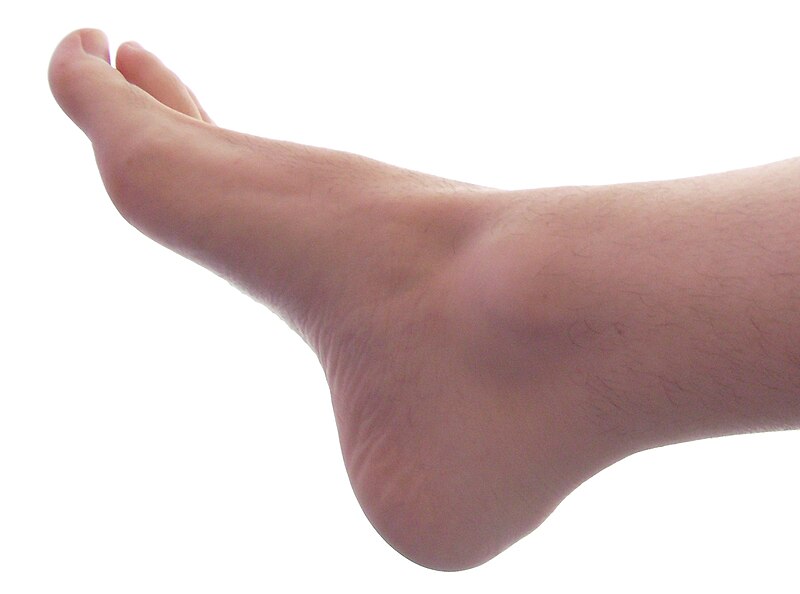
The
plantar fascia is an elastic covering on the sole of the foot. It is a
shock-absorbing pad which holds up the arch. When it becomes inflamed, the
condition is called plantar fasciitis. It causes a dull ache along the length
of the arch.
Plantar
fasciitis is due to over-stretching or partially tearing the arch pad. People
with rigid and high arches experience this condition most frequently. When they
put weight on their feet or push off for the next stride, they feel pain. The pain
can be particularly intense upon arising in the morning or after sitting for a period
of time.
Good
arch support prevents the arch from collapsing and the plantar fascia from
stretching. Arch supports can even be placed in slippers and worn as soon as a
person rises in the morning. Going barefoot without support can stretch the
plantar fascia in just a few steps. Arch supports can relieve the pain of
plantar fasciitis within a few days.
Maintaining
a healthy weight, doing warm-up exercises, and good arch support are the keys
to avoiding foot injuries. If there is an injury, low impact exercises are best
while the foot is recovering. It’s important to give the foot arch adequate time
to heal before returning to strenuous exercise.
Stress Fractures
Stress fractures are tiny hairline
fractures or cracks that occur in weight-bearing bones, like the femur and
tibia. This type of injury can occur after intense and prolonged exercise. The best
way to avoid stress fractures is to wear well-made athletic shoes that fit
properly and provide effective support and cushioning. Rather than doing too
much exercise too fast, gradually increasing the intensity of workouts will
help to avoid excessive stress on the bones.
Rotator Cuff
Rotator cuff muscles hold the
shoulder together and enable the shoulder to move with precision. These
shoulder muscles are called supraspinatus, infraspinatus, subscapularis, and
teres minor. Shoulders have shallow sockets and lack ligament strength. Weakness
in the rotator cuff muscles enables the head of the shoulder to slide around in
the joint.
Sports like softball, tennis,
volleyball, swimming, and weight lifting require arm motions above the head. Tennis
players may feel this pain when they serve or hit an overhead smash. Golfers
may feel it in the backswing and/or follow-through. When the shoulder joint and
rotator cuff are stressed from these motions, the rotator cuff muscles stretch
out. They become inflamed and cause joint pain.
When shoulder joint pain lasts
longer than a few days, a program of range-of-motion exercises can help
strengthen the rotator cuff muscles. Strengthening these muscles helps hold the
shoulder firmly in place. The head will have less of a tendency to slip out of
the socket and the tendons will no longer become inflamed. Treatment for
rotator cuff injuries can include physical therapy, ultrasound, moist heat and
electrical muscle stimulation.
Avoiding Injuries
The best ways to avoid sports
related injuries are to stay in shape, maintain a healthy weight, and avoid
activities that might cause injuries. Staying in shape keeps your body stronger
and flexible. Maintaining a healthy body weight prevents excessive stress on
knees and ankles. Some hazards are associated with physical activity, but being
careful keeps the risk to a minimum.
Chiropractic care is important
for athletes of all levels. Concentrating on joint alignment and motion is one
of the keys to reducing injuries and reducing recovery times from workouts.
Chiropractors are able to address issues throughout the body. This includes the
extremities like arms and legs.
Proper equipment is also very
important for avoiding injuries. Make sure that the gear you use is in good
working order. If you have any doubts about your gear, take it to an expert and
they will review and suggest any necessary improvements.
---
In this article, I have
discussed common sports injuries and how to avoid them. The injuries I’ve
included in this post are shin splints, Achilles tendonitis, foot arch pain,
stress fractures, and rotator cuff injuries. I’ve included suggestions on how
to avoid injuries and how to treat some of them when they occur.
If you know of someone who might
benefit from the information in this blog, please pass it along to him or her. If
you have a comment about this article, please leave it in the comments section.
At Vibrant Life, we address all
of the key elements to add vibrance and vitality to your life. This includes
nutrition, chiropractic care, and fitness. If you’re suffering from a sports
related injury or if you need to consult with a chiropractor about your
exercise regimen, please contact our office to set up an appointment.
Dr. Jon Thomas is a Board
Certified Chiropractic Physician, his interest in health started at an early
age resulting from an athletic life, including BMX racing, Professional Snow
Skiing, Water Skiing, Baseball, Weight Lifting, and Martial Arts. After
learning from top health experts in the world, Dr. Thomas’s life is dedicated
to reaching people of all ages to begin their life transformation. The goal is
to start the body healing resulting in a body that is functioning at its
optimal. In addition to serving his community in his Mandarin Based
Practice, Dr. Thomas is seen regularly on TV’s First Coast Living talking about
his patient’s transformations, speaking at events throughout the community, and
writing articles to re-shape the health of the Jacksonville Community.


